Japanese Knotweed & Invasive Weed Removal in Kent: What Commercial Property Owners Must Know
Japanese knotweed and other invasive weed species are a serious and growing problem for commercial properties across Kent. As a property owner or facilities manager, you have specific legal obligations — and the cost of ignoring them can far exceed the cost of professional treatment. This guide covers what qualifies as an invasive weed, what the law says, and why professional removal by PA6AW-certified specialists is the only reliable solution.
⚠️ Found invasive weeds on your commercial site? Weed Control Kent provides certified invasive weed surveys and treatment across Kent and Medway. PA6AW qualified, BALI accredited, fully insured. Request a free site survey →
What Is Japanese Knotweed — and Why Does It Affect Commercial Properties?
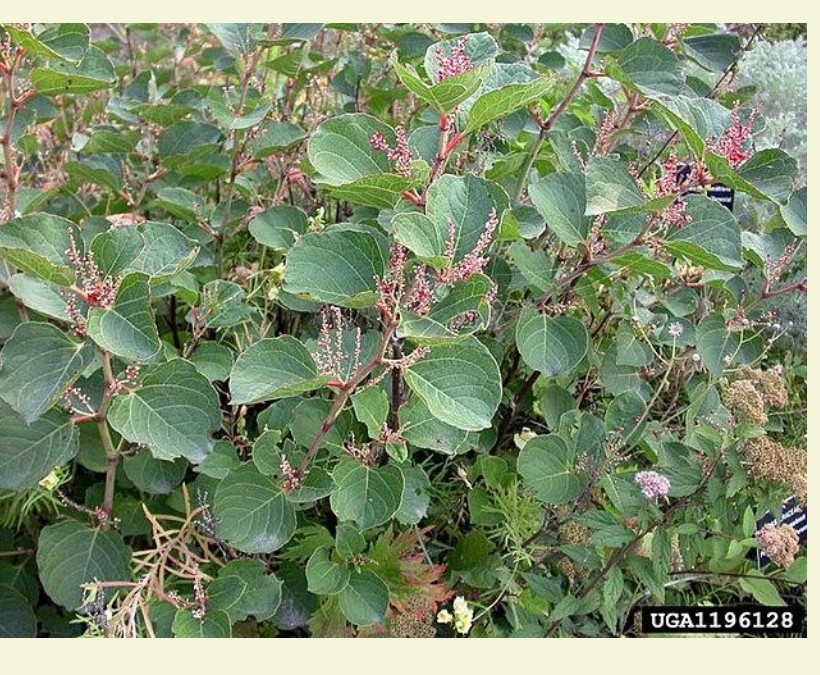
Japanese knotweed (Reynoutria japonica) is one of the most invasive plant species in the UK. Introduced as an ornamental plant in the 19th century, it has spread extensively across Kent, particularly along river corridors, railway embankments, roadsides, and brownfield sites. Commercial properties — including industrial estates, car parks, business parks, and development land — are frequently affected.
What makes knotweed genuinely dangerous for a commercial property owner is its growth behaviour. The plant spreads through its root system (rhizomes), which can extend up to 7 metres horizontally and 3 metres deep. It forces its way through block paving, concrete joints, drainage infrastructure, and building foundations — causing structural damage that is expensive to repair and can significantly affect property values.
Beyond the physical damage, the presence of Japanese knotweed on or near your property creates a range of legal, financial, and reputational risks that facilities managers and property owners need to understand clearly.
Your Legal Obligations as a Commercial Property Owner in Kent
Japanese knotweed is classified as a controlled waste under UK law. This creates specific duties for property owners and occupiers.
The Wildlife & Countryside Act 1981
Under Schedule 9 of the Wildlife & Countryside Act 1981, it is an offence to plant or otherwise cause Japanese knotweed to grow in the wild. This means that if knotweed spreads from your property onto neighbouring land — whether a public highway, a watercourse, or an adjacent private property — you may be liable for the consequences. Failure to control a known infestation that then spreads constitutes a criminal offence.
The Environmental Protection Act 1990
Japanese knotweed must be disposed of as controlled waste. You cannot simply dig it up and put it in a skip. All excavated knotweed material must be transported to a licensed disposal facility by a registered waste carrier. Fly-tipping knotweed — even accidentally — carries significant penalties under the Environmental Protection Act.
The Invasive Non-Native Species Regulations 2019
These regulations place a duty on landowners to manage certain invasive species on their land. Local authorities in Kent have the power to serve Community Protection Notices requiring landowners to take action on invasive plants where they are causing nuisance or harm. Failure to comply with such a notice is a criminal offence and can result in fixed penalty notices or prosecution.
Civil Liability to Neighbours
There is well-established case law establishing that a property owner can be held civilly liable if knotweed spreads from their land onto neighbouring property and causes damage or loss of enjoyment. Claims have been upheld for reduced property values, cost of treatment, and the stress caused by the encroachment. For commercial properties with neighbouring residential or high-value commercial land, this risk is significant.
⚠️ Mortgage and sale implications: Japanese knotweed within 7 metres of a habitable structure must be declared in property transactions and can prevent mortgage lending. For commercial lenders and developers, this can halt transactions entirely until a treatment plan is in place from a recognised specialist.
Other Invasive Weed Species Affecting Kent Commercial Properties
While Japanese knotweed receives the most attention, several other invasive species pose significant problems for commercial landowners in Kent. Professional invasive weed removal often needs to address multiple species simultaneously.
Giant Hogweed
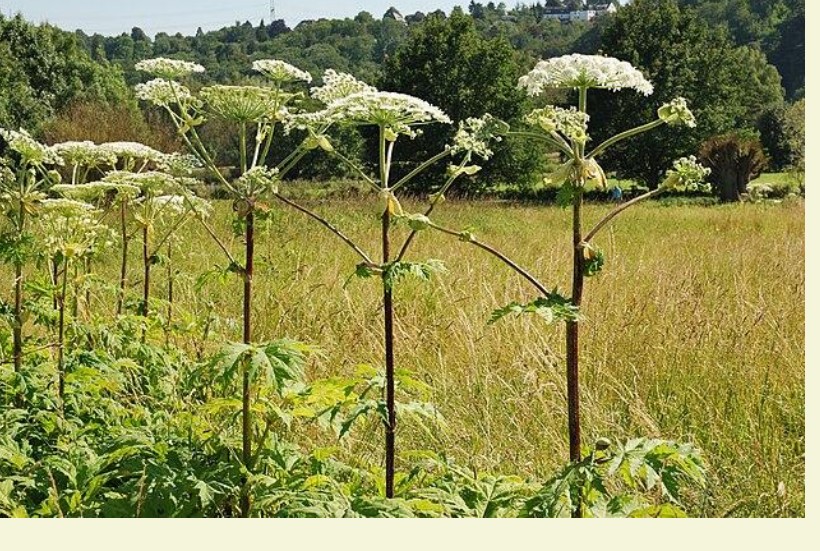
Giant hogweed (Heracleum mantegazzianum) is particularly prevalent along Kent's river corridors and on neglected commercial land. Its sap causes severe photosensitive burns on skin contact and can cause permanent scarring and temporary blindness. From a liability perspective, this plant on your commercial site represents a serious health and safety risk — particularly if the site is accessible to the public, contractors, or maintenance staff. Giant hogweed is also listed under Schedule 9 of the Wildlife & Countryside Act, making its spread a criminal matter.
Himalayan Balsam
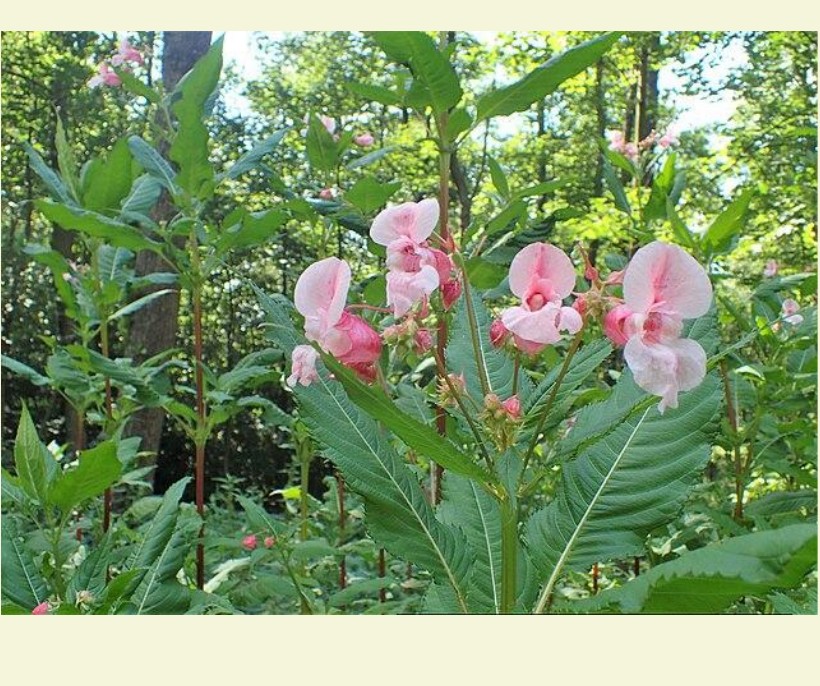
Himalayan balsam is widespread along waterways and on damp, disturbed ground across Kent. While it does not carry the same structural damage risks as knotweed, it spreads aggressively — displacing native vegetation and leaving riverbanks bare and vulnerable to erosion in winter. On commercial sites adjacent to watercourses, its management is often required by the Environment Agency as part of site licence conditions or planning obligations.
Rhododendron Ponticum
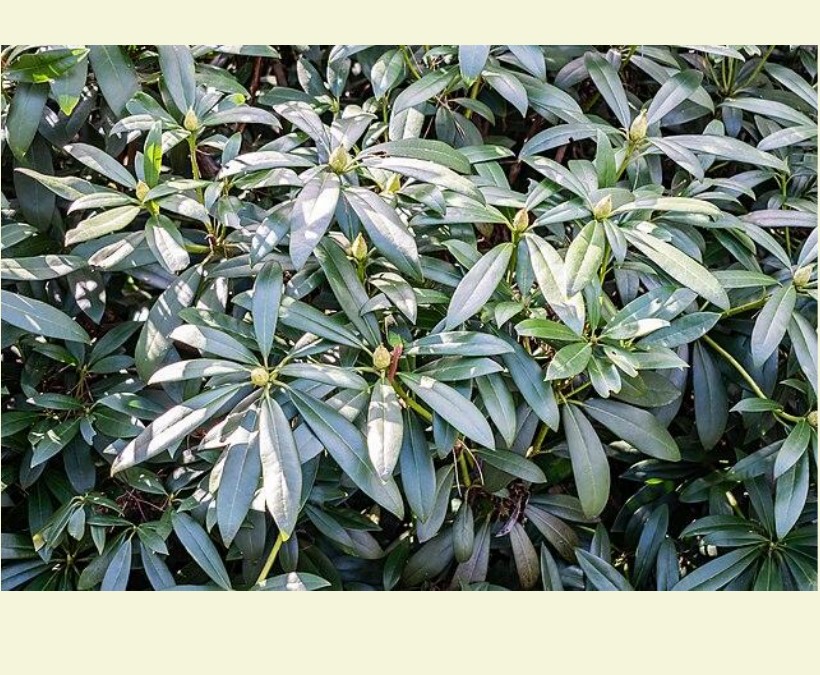
Common on larger estates, golf courses, and landscaped commercial properties across Kent, rhododendron ponticum is a highly invasive shrub that forms dense thickets, shading out native species and preventing natural regeneration. Management typically requires a combination of mechanical cutting and targeted herbicide treatment by qualified operatives.
Why DIY or Unqualified Treatment Rarely Works
Faced with a knotweed or invasive weed problem, many property owners instinctively attempt DIY control — cutting back growth, applying off-the-shelf herbicides, or arranging for groundskeeping staff to dig it out. In almost every case, this approach fails and frequently makes the situation worse.
The rhizome problem
Japanese knotweed spreads primarily through its root system. A fragment of rhizome as small as 0.7 grams can establish a new plant. Digging without following specific controlled excavation protocols almost inevitably causes fragmentation, spreading the plant further across the site. Knotweed that has been mechanically disturbed is often harder to eradicate than an undisturbed stand.
The wrong herbicide
Retail herbicide products available to the public are not approved for use on Japanese knotweed at commercial sites, near water, or on hard surfaces. Professional treatment requires products approved under the Control of Pesticides Regulations, applied by operatives holding the relevant PA certifications. Applying inappropriate products not only fails to control the plant — it can constitute illegal use under pesticide regulations.
Disposal requirements
Any knotweed material removed from your site — including soil contaminated with rhizome fragments — is classified as controlled waste and must be transported by a registered waste carrier to a licensed facility. Without this documentation, you remain liable for improper disposal regardless of who carried out the work.
Insurance and liability implications
If you attempt to manage an invasive weed problem without professional involvement and the issue worsens — or spreads to neighbouring land — your insurer may take the view that you failed to take reasonable steps to manage a known risk. A documented treatment programme carried out by certified specialists provides a clear paper trail demonstrating due diligence.
Professional Invasive Weed Removal: What the Process Looks Like
Professional treatment of Japanese knotweed and other invasive species follows a structured programme — there is no single-visit solution. Here is what a properly managed programme involves:
Stage 1: Site Survey and Identification
A thorough site survey by a qualified operative identifies all invasive species present, maps their extent, and assesses their proximity to structures, drainage systems, and site boundaries. This survey forms the basis of the treatment plan and provides your initial documentation of the problem's extent — useful for insurance purposes and for any future property transaction.
Stage 2: Treatment Plan
A site-specific treatment plan is prepared, detailing the herbicide products to be used, the method of application, the treatment schedule, and the waste management approach. For knotweed specifically, herbicide-based treatment programmes typically run over two to three growing seasons, with applications timed to coincide with periods of maximum plant activity. A management plan document is supplied, which can be provided to lenders, solicitors, or insurers as evidence of professional management.
Stage 3: Herbicide Application
Professional herbicide treatment of invasive weeds requires operatives certified to PA1 and PA6AW as a minimum. At Weed Control Kent, all our operatives hold these certifications. Where treatment is required near watercourses or drainage features — which is common in Kent given the county's extensive river and drainage networks — the PA6AW qualification is a legal requirement, not optional.
Stage 4: Monitoring and Follow-up
Effective knotweed management requires monitoring between treatment seasons and follow-up applications where regrowth occurs. Annual site visits are standard practice, with treatment records maintained throughout to document the progression of the programme.
Stage 5: Certification
On completion of a successful treatment programme, a certification of treatment can be provided — useful for property transactions, mortgage applications, and insurance purposes. This document confirms that the site has been managed by certified professionals following an appropriate programme.
Why PA6AW Certification Matters for Invasive Weed Treatment
The PA6AW certification — which all Weed Control Kent operatives hold — is specifically designed for professional pesticide application on hard surfaces and near water. This is particularly relevant for invasive weed treatment because:
- Invasive species frequently colonise watercourses. Japanese knotweed, Himalayan balsam, and giant hogweed are all common on riverbanks and drainage channels in Kent. Treatment near water requires specific training in application methods that minimise herbicide runoff and protect aquatic environments.
- Hard surface application is central to invasive weed management. Knotweed growing through block paving or concrete requires targeted application to hard surface environments — the specific scope of the PA6AW qualification.
- The Environment Agency takes enforcement action. Herbicide application near water without appropriate certification is an offence under pesticide regulations. Using an uncertified contractor near a watercourse on your site exposes you to enforcement action as the responsible landowner.
Frequently Asked Questions
How much does commercial knotweed treatment cost?
Treatment costs vary significantly depending on the scale of the infestation, the site conditions, and the treatment programme required. A herbicide-based programme for a contained infestation on a single commercial site typically starts from a few hundred pounds per season over two to three years. We provide free site surveys and detailed quotations — contact us to arrange an assessment.
How long does Japanese knotweed treatment take?
Herbicide treatment programmes typically run over two to three growing seasons for established infestations, with applications in spring and late summer/autumn when the plant is most susceptible. Early-stage infestations may be treatable within one to two seasons. Anyone offering a single-season guarantee for an established infestation should be treated with caution.
Can Japanese knotweed be removed before a property sale?
Not in the sense of instant eradication. However, having a documented management plan in place from a certified specialist is often sufficient for mortgage lenders and conveyancers — it demonstrates that the problem is being professionally managed. We can provide management plan documentation as part of our service, which many lenders and solicitors accept as sufficient for a transaction to proceed.
Is Japanese knotweed treatment covered by insurance?
Standard commercial property insurance policies do not generally cover knotweed treatment costs, as the plant is considered a known risk. However, if knotweed has spread from an adjacent property onto yours, you may have a civil claim against that owner. Some specialist environmental liability policies do include invasive species cover — worth checking with your broker.
Professional Invasive Weed Removal Across Kent & Medway
Weed Control Kent — operated by BALI accredited Roundwood Solutions Ltd — provides certified invasive weed surveys, treatment programmes, and management documentation for commercial properties across Kent. Our PA6AW-qualified operatives are experienced in Japanese knotweed management, giant hogweed treatment, and all invasive species affecting Kent commercial sites.
We cover all of Kent including Medway, Maidstone, Dartford, Gravesend, Canterbury, Ashford, Tonbridge, and surrounding areas.
Or call 07545 642021 to discuss your requirements.